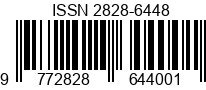
Tantangan Pendidikan Islam Zaman Modern
DOI:
https://doi.org/10.36769/tarqiyatuna.v3i2.690Keywords:
Challenges, Islamic Education, TimesAbstract
In this era, with all the advances in IT and technology as well as changes in social dynamics, it has brought a number of big challenges to the development of Islamic education in Indonesia. Therefore, a deep understanding of these challenges is the main key to implementing effective solutions in aligning Islamic values with the needs of contemporary developments. This research is qualitative research with priority on literature-based critical analysis. The way to conduct this research is to use the narrative method. In critical studies, understanding the context of the challenges of Islamic education in today's exploitative era. This research aims to analyze phenomena or dynamics from an Islamic perspective and strategic efforts to face these challenges. The research results show that the challenges of Islamic education in the current era include (1) The existence of an approach with a worldly orientation, (2) The influence of social media, (3) New approaches in the field of IT-based Islamic education (4) Technology application-based approaches. The strategies and efforts made to answer the challenges of Islamic education in the current era can be formulated as follows: (1) Instilling the values of Islamic education in a comprehensive manner, (2) Approach to Karimah Moral Education in the younger generation, (3) considering the Islamic education system, (4) Improving the quality of teacher resources with an Islamic character, (4) Adapting to applications and technology.
References
Adab, D. Z., M. Pd I. ,. dkk Penerbit. (t.t.-a). DINAMIKA PENDIDIKAN ISLAM. Penerbit Adab.
Adab, D. Z., M. Pd I. ,. dkk Penerbit. (t.t.-b). Modernisasi Pendidikan Agama Islam. Penerbit Adab.
Adab, D. Z., M. Pd I. ,. dkk Penerbit. (t.t.-c). Modernisasi Pendidikan Agama Islam. Penerbit Adab.
Adab, D. Z., M. Pd I. ,. Penerbit. (t.t.-d). MENINGKATKAN MOTIVASI BELAJAR dalam PENDIDIKAN AGAMA ISLAM. Penerbit Adab.
Administrator. (2012, September 21). FIQIH IBADAH DAN PRINSIP IBADAH DALAM ISLAM. LPSI. https://lpsi.uad.ac.id/fiqih-ibadah-dan-prinsip-ibadah-dalam-islam/
Engkoswara, A. (2002). Lembaga pendidika sebagai pusat pembudayaan: Hidup harmoni di keluarga, sekolah dan di masyarakat. Universitas Indonesia Library; Yayasan Amal Keluarga. https://lib.ui.ac.id
Fatwa;, A. U. Y. bin M. A.-S. A. A. S. (t.t.). Fiqih Praktis Puasa Ramadhan. Diambil 20 Mei 2023, dari //eperpus.kemenag.go.id%2Fbdk-aceh%2Findex.php%3Fp%3Dshow_detail%26id%3D825
Hadi, S. (1991). Statistik dalam Basica Jilid 1. Penerbit Andi.
Hidayat, N. (2015). PERAN DAN TANTANGAN PENDIDIKAN AGAMA ISLAM DI ERA GLOBAL. Jurnal Pendidikan Agama Islam, 12(1), Article 1. https://doi.org/10.14421/jpai.2015.121-05
Lusiana, L., Armiati, A., & Yerizon, Y. (2022). Kemandirian Belajar dan Persepsi Siswa Mengenai Guru Terhadap Kemampuan Pemecahan Masalah Matematis Siswa SMK. Mosharafa: Jurnal Pendidikan Matematika, 11(1), 155–166.
Muzakki, Z. (2014). Perilaku Akhlaq Dalam Pendidikan Islam. Jurnal Asy-Syukriyyah, 13(1), 87–127.
Muzakki, Z. (2018). Urgensi Pendidikan Akhlak di Usia Dini. Jurnal Asy-Syukriyyah, 19(1), 50–79.
Najati, M. ’Utsman; A. M. A. R. ’Usmani; (2004). Al-quran dan ilmu jiwa / Mohammad ’Utsman Najati (Bandung). Pustaka. //senayan.iain-palangkaraya.ac.id/index.php?p=show_detail&id=3851&keywords=
QUTHB, S. A. Y. A. A. S. B. (2000). Tafsir fi zhilalil qur’an: Di bawah naungan Al-Qur’an jilid 1 (JAKARTA). Gema Insani. //%2Findex.php%3Fp%3Dshow_detail%26id%3D10232%26keywords%3D
Romdloni, R. (2018). Peningkatan Efektivitas Pembelajaran Pendidikan Agama Islam (PAI) melalui Manajemen Kelas. Evaluasi, 1(2), 151–166.
Siswanto, A. (2021). Manajemen Kelas Dalam Meningkatkan Efektifitas Pembelajaran Siswa. Idaarotul Ulum (Jurnal Prodi MPI), 3(2 Desember), 78–101.
Syahri, A. A. (2014). STATISTIKA PENDIDIKAN. SIGMA: JURNAL PENDIDIKAN MATEMATIKA, 6(2), Article 2. https://doi.org/10.26618/sigma.v6i2.7246
Tafsir, A. (1992). Ilmu pendidikan dalam perspektif Islam. Remaja Rosdakarya.
Umi, Z., & Mujiyatun, M. (2021). MANAJEMEN PENGELOLAAN KELAS DALAM MENINGKATKAN MUTU PEMBELAJARAN SISWA DI MADRASAH ALIYAH HIDAYATUL MUBTADIIN SIDOHARJO KECAMATAN JATI AGUNG KABUPATEN LAMPUNG SELATAN. JURNAL AN-NUR: Kajian Ilmu-Ilmu Pendidikan dan Keislaman, 7(02), 131–141.
Usman;, M. B. (2002). Metodologi Pembelajaran Agama Islam (Jakarta). Ciputat Pers. //opac.pip-semarang.ac.id/index.php?p=show_detail&id=4769&keywords=
Zubaidi, Z., & Zubairi, Z. (2022). KORELASI GAYA KEPEMIMPINAN DAN KEMAMPUAN MANAJERIAL KEPALA MADRASAH DENGAN MOTIVASI GURU MI DI KOTA TANGERANG. Jurnal Asy-Syukriyyah, 23(2), Article 2. https://doi.org/10.36769/asy.v23i2.265
Zubairi, Abnisa, A. P., & Musthofa. (2023). PROFESIONALISME GURU PENDIDIKAN AGAMA ISLAM ERA 4.0. AICOMS: Annual Interdisciplinary Conference on Muslim Societies, 3(1), Article 1.
Zubairi, Z. (2023). Challenges and Responses to Islamic Education in the Technology Era 4.0. AL-ISHLAH: Jurnal Pendidikan, 15(2). http://journal.staihubbulwathan.id/index.php/alishlah/article/view/3235
Zubairi, Z., Muljawan, A., & Illahi, N. (2022). Nilai-Nilai Pendidikan Islam Dalam Asma’ul Husna (Al-Rahman, Al-Rahiim, Al-Lathiif, Al-Haliim, Al-Syakuur). TARQIYATUNA: Jurnal Pendidikan Agama Islam dan Madrasah Ibtidaiyah, 1(1), 59–67.
Zubairi, Z., & Nurdin, N. (2022). The Challenges of Islamic Religious Education in the Industrial Revolution 4.0. Scaffolding: Jurnal Pendidikan Islam Dan Multikulturalisme, 4(3), Article 3. https://doi.org/10.37680/scaffolding.v4i3.2120
Zubairi, Z., Nurdin, N., & Solihin, R. (2022). Islamic Education in the Industrial Revolution 4.0. Scaffolding: Jurnal Pendidikan Islam Dan Multikulturalisme, 4(3), Article 3. https://doi.org/10.37680/scaffolding.v4i3.2118
Downloads
Published
How to Cite
Issue
Section
License
Copyright (c) 2025 TARQIYATUNA: Jurnal Pendidikan Agama Islam dan Madrasah Ibtidaiyah

This work is licensed under a Creative Commons Attribution-NonCommercial 4.0 International License.